Nepal · Trekking · Moderate
Ghorepani Poon Hill Trek
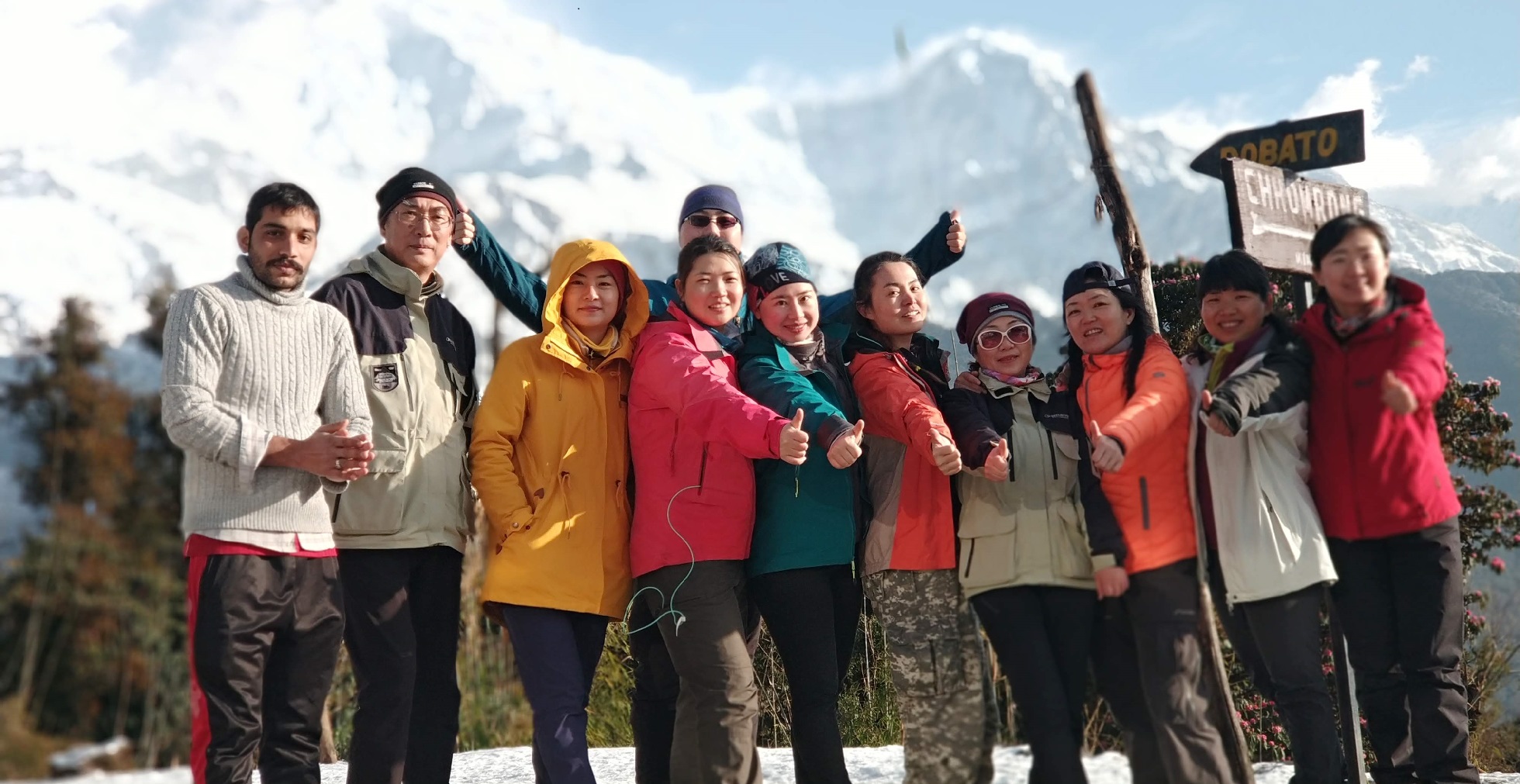


Trip overview
The Ghorepani Poon Hill Trek is an 8-day trip from Kathmandu to the most famous sunrise viewpoint in Nepal: Poon Hill, 3,210 m, facing Dhaulagiri and the Annapurna range. It is short, low and friendly, with four days of walking on stone trails between Magar and Gurung villages. We run it from Kathmandu every Saturday, and privately on any date.
This Ghorepani Poon Hill Trek suits first-time trekkers, families and anyone with a week to spare. You never sleep above 2,860 m, so altitude is rarely a problem. A licensed, English-speaking guide leads the way and porters carry your main bag.
The route makes a loop. You climb from Birethanti to Ulleri and Ghorepani, watch sunrise from Poon Hill, cross the Deurali pass to Tadapani and walk out through Ghandruk. Each night has a different view, and you never walk the same trail twice.
It is not a stroll. The staircase to Ulleri has more than 3,000 stone steps, the Poon Hill morning starts at 5 am, and the descent to Ghandruk is hard on the knees. Train a little and you will enjoy all of it.
What stays with people is the dawn. Dhaulagiri, 8,167 m, turns gold first, then Annapurna South and Machhapuchhre, while the valley below is still dark. In spring the rhododendron forest between Ulleri and Tadapani is in flower for hours of the walk.
The Ghorepani Poon Hill Trek costs US$ 650 to US$ 860 per person with us, depending on the size of your group. That covers hotels in Kathmandu and Pokhara, the tourist bus, private transport to and from the trail, permits, guide and porters, three teahouse nights and full board on the trek. With more days, the Annapurna Base Camp Trek continues into the mountains from the same trail, and our guide to the best trekking season in Nepal will help you pick a month.
Highlights
- Poon Hill sunrise (3,210 m): Dhaulagiri, Annapurna I, Annapurna South and Machhapuchhre lit from the east.
- A loop, not an out-and-back: in by Ulleri and Ghorepani, out by Tadapani and Ghandruk.
- Rhododendron forest: red and pink flowers over the trail in March and April.
- Ghandruk: the largest Gurung village in the region, with slate roofs and a small museum.
- Low altitude: the highest night is 2,860 m at Ghorepani.
- Deurali pass (3,090 m): a second wide mountain view with far fewer people.
- Two nights in Pokhara: a lakeside hotel before and after the trek.
- A group every Saturday: join alone or with friends, or ask us for private dates on any day.
Itinerary
Route map
Each stop on the route with its altitude, from 820 m to 2,860 m.
On footBy roadRouteHighest point
Day 1Kathmandu1400m
We meet you outside the arrivals hall at Tribhuvan International Airport and drive you to your hotel in a private vehicle. The ride takes 20 to 40 minutes, depending on traffic. Your room is in a 3-star hotel close to Thamel, with breakfast included tomorrow.
There is no walking planned today. Rest, change money, and get used to the time zone. In the late afternoon your guide comes to the hotel for a briefing, checks your boots and layers, and hands over your duffel bag, plus a down jacket and sleeping bag if you need them.
Thamel’s gear shops are a five-minute walk away if anything is missing. Poles, gloves and water bottles cost less here than at home. Dinner is your own choice tonight, and your guide will point you to a good place for a first plate of momos.
Pack the duffel for the porter before you sleep and keep it under 12 kg. Whatever you do not need on the trail stays in the hotel’s storage room until you return. The bus to Pokhara leaves early.
Day 2Pokhara820m
Your guide collects you after an early breakfast and walks you to the tourist bus, which leaves around 7 am. The road to Pokhara covers 200 km and follows the Trishuli and Marsyangdi rivers for much of the way. Expect six to eight hours with two stops for tea and lunch.
Sit on the right side if you can. On a clear day Ganesh Himal and then Manaslu show above the terraces, and near Pokhara the Annapurna range fills the windscreen. Lunch at the roadside stop is at your own cost.
Pokhara sits at 820 m, lower and warmer than Kathmandu. Your hotel is a 3-star property near Phewa Lake, and the afternoon is free. Walk the lakeside path, rent a rowing boat, or just watch Machhapuchhre turn pink at sunset.
Before dinner your guide checks the permits and confirms tomorrow’s pick-up time. This is the last place to use a cash machine, so withdraw the rupees you want for the trail. Sleep early, because the stone steps to Ulleri are waiting.
Day 3Ulleri1960m
The trek starts today with a 90-minute drive from Pokhara to Birethanti in a private vehicle. Your guide shows the permits at the checkpoint by the bridge, and you start walking beside the Bhurungdi Khola. The first two hours are gentle, past small farms, waterfalls and tea shops.
Lunch is usually at Tikhedhunga, 1,540 m. Eat well, because the afternoon holds the hardest hour of the whole trek. Just past the suspension bridge, a staircase of more than 3,000 stone steps climbs straight up to Ulleri.
Your guide sets a slow, even pace and stops every 20 minutes. Mule trains use these steps too, so stand on the uphill side when you hear bells. Most people take 90 minutes to two hours from the bridge to the village.
Ulleri is a Magar village at 1,960 m with Annapurna South and Hiunchuli in view from the lodge terraces. Total walking is about five hours and 10 km, with roughly 900 m of ascent. Dinner is in the teahouse dining room, and the room is a simple twin.
Day 4Ghorepani2860m
Today is all forest. You leave Ulleri after breakfast and climb through oak and rhododendron for about five hours, gaining 900 m over 10 km. The gradient is kinder than yesterday, and the shade keeps you cool.
The trail passes Banthanti and reaches Nangethanti for lunch. In March and April this section is the reason people choose the trek, when the rhododendron trees flower red and pink over the path for hours. Langur monkeys are common here, and your guide will usually spot them before you do.
Ghorepani appears suddenly at the top of a last flight of steps. The name means “horse water”, from the days when traders rested their animals here. At 2,860 m it is the highest place you sleep, and the evening is noticeably cold.
Your guide checks how everyone feels at this height and arranges the wake-up call. Lodges here have a big iron stove in the middle of the dining room, and that is where every trekker in the village ends up after dinner. Lay out your headlamp, gloves and down jacket before bed. The start tomorrow is in the dark.
Day 5Poon Hill and Tadapani2630m
You leave the lodge by headlamp around 5 am. The climb to Poon Hill, 3,210 m, takes 45 minutes to an hour on a stepped path and gains 350 m. Go slowly and you will still be there before the sun.
Sunrise is the moment of the trek. Dhaulagiri, 8,167 m, catches the light first, followed by Annapurna I, Annapurna South, Hiunchuli and the fish-tail summit of Machhapuchhre. The tower gets crowded in October and November, so your guide finds you a quieter spot along the ridge.
After breakfast back at the lodge, the trail climbs again through forest to the Deurali pass at 3,090 m, with views as wide as Poon Hill and far fewer people. From there it drops steeply beside a stream to Banthanti for lunch, then rises one last time to Tadapani.
Expect six to seven hours of walking in total, including the dawn climb, over about 12 km. Tadapani is a small clearing of lodges at 2,630 m, facing Machhapuchhre. If the sky is clear, the sunrise from your lodge tomorrow needs no climbing at all.
Day 6Ghandruk and Pokhara820m
Wake early and look out of the window. Machhapuchhre and Annapurna South stand directly across the valley from Tadapani, and the light on them at dawn is worth the cold. Breakfast is on the terrace if the weather allows.
The walk today is short and all downhill, about three hours and 6 km through mossy forest to Ghandruk, 1,940 m. Trekking poles save your knees on the stone steps. Listen for birds here, because this is one of the best stretches for them.
Ghandruk is the largest Gurung village in the region, with slate roofs, stone lanes and many families who have served in the Gurkha regiments. Your guide walks you through the old quarter and the small Gurung museum before lunch. The view of Annapurna South from the village is close and enormous.
After lunch a private vehicle meets you at the road head and drives you to Pokhara, about 55 km and three hours. You lose 700 m on foot this morning and more on the drive, and the air feels thick and warm at the lake. Your 3-star hotel has a hot shower waiting, and dinner on the lakeside is your own choice tonight.
Day 7Kathmandu1400m
After breakfast your guide takes you to the tourist bus for the 200 km journey back to Kathmandu. It leaves around 7:30 am and takes six to eight hours, with a lunch stop on the way. Lunch is at your own cost.
If you would rather not spend the day on the road, tell us when you book. A flight from Pokhara takes 25 minutes and can be added for an extra charge. Many guests also choose to stay on in Pokhara for a day or two of rest, paragliding or boating, and we can move your bus ticket.
Back in Kathmandu you return to your 3-star hotel and collect the luggage you left behind. Your guide hands over your trek completion certificate and takes back the down jacket and sleeping bag.
The evening is free. Thamel is good for last shopping, with singing bowls, pashmina, tea and prayer flags all within a few streets of the hotel. Tell your guide your flight time so we can set the airport transfer for tomorrow.
Day 8Departure1400m
We drive you to Tribhuvan International Airport in a private vehicle, three hours before your flight. Breakfast at the hotel is included. Check-out is usually at noon, and the hotel will hold your bags if your flight leaves late.
If you have a free morning, your guide can suggest a short visit. Swayambhunath, the hilltop stupa west of Thamel, takes about two hours including the drive. Boudhanath is closer to the airport and fits well before an afternoon flight. Entry fees and taxis for these visits are not included.
Many trekkers add something after Poon Hill. Chitwan National Park is a five-hour drive from Kathmandu for two or three days of jungle walks and rhino tracking. If the mountains have you hooked, the Annapurna Base Camp Trek starts from the same valley and takes you into the middle of the peaks you watched at sunrise.
Before you leave, tell us how the trek went. We read every comment and pass them on to your guide and porters. Have a safe flight home.
What's included
Included in the price
- Airport transfers: arrival and departure in a private vehicle.
- Kathmandu hotel: two nights in a 3-star hotel on a twin-share basis with breakfast.
- Pokhara hotel: two nights in a 3-star hotel on a twin-share basis with breakfast.
- Teahouse rooms: three nights in twin-share rooms on the trail.
- Kathmandu to Pokhara and back by tourist bus.
- Pokhara to Birethanti and Ghandruk to Pokhara by private vehicle.
- Meals on the trek: breakfast, lunch and dinner from Ulleri to Tadapani, breakfast and lunch on the last trekking day, with tea or coffee at each meal.
- Trek leader: a licensed, English-speaking guide.
- Porters: one porter for every two trekkers.
- Staff costs: wages, insurance, food, lodging and gear for your guide and porters.
- On loan for the trek: a down jacket and a sleeping bag, if you need them.
- Yours to keep: a duffel bag and a trekking map.
- First-aid kit, carried by your guide.
- Permits: the Annapurna Conservation Area Permit (ACAP) and any other trekking permit the route requires.
- Trek completion certificate.
- All government taxes and fees.
Not included
- International flights to and from Kathmandu.
- Nepal visa fee, paid on arrival at Tribhuvan International Airport.
- Travel insurance. It is mandatory and must cover trekking and helicopter evacuation up to 3,500 m.
- Lunch and dinner in Kathmandu and Pokhara, and lunch on the two bus days.
- Extra hotel nights for early arrival, late departure or extra days in Pokhara.
- Flights between Kathmandu and Pokhara, available as an upgrade.
- Drinks: bottled water, soft drinks, alcohol and hot drinks outside meal times.
- Hot showers, Wi-Fi and battery charging in the teahouses.
- Personal trekking gear, other than the items we lend or give you.
- Tips for your guide, porters and drivers.
Dates and price
A new group leaves every Saturday. Private dates are available on any day of the week.
| Starts | Ends | Status | Price | Book |
|---|---|---|---|---|
| Departs: Every Saturday. Book your date | ||||
Trip information
Price by Group Size
The Ghorepani Poon Hill Trek costs US$ 650 to US$ 860 per person. The more people in your booking, the lower the price for each of you. Every price below includes the same services.
| Travelers in your booking | Price per person |
|---|---|
| 1 | US$ 860 |
| 2 to 4 | US$ 710 |
| 5 to 7 | US$ 690 |
| 8 or more | US$ 650 |
- To book: a 20% deposit confirms your place. You pay the balance when you arrive in Kathmandu.
- Joining alone: you can join any Saturday group at the price for one traveler.
- Private trek: the same prices apply on any start date you choose.
- Not in the price: international flights, visa, insurance, tips and personal spending. The full list is under Excludes.
Comparing prices: some 8-day offers for this trek start near US$ 500. Check whether a porter is included, because it is usually an extra. Ours includes one porter for every two trekkers, 3-star hotels in both cities and private vehicles to and from the trail.
4-day trek from Pokhara: if you are already in Pokhara, the same walk costs less. The price below covers the private vehicle to Birethanti and back from Ghandruk, three teahouse nights, all meals on the trek, the permit and a licensed guide.
| Travelers in your booking | 4 days from Pokhara, per person |
|---|---|
| 1 | US$ 430 |
| 2 to 4 | US$ 380 |
| 5 or more | US$ 330 |
A porter, hotels in Pokhara and transport from Kathmandu are not in the 4-day price. Ask us and we add any of them.
Best Time for the Ghorepani Poon Hill Trek
The best time for the Ghorepani Poon Hill Trek is mid-March to mid-June and mid-October to mid-December. Both windows give dry trails and the clear dawn skies that Poon Hill is known for. Spring is rhododendron season.
The forest between Ulleri, Ghorepani and Tadapani flowers from mid-March to late April, and mornings are mild. Haze can soften the afternoon views, so the sunrise matters even more.
Autumn brings the sharpest mountain views of the year. Mid-October to mid-November is the busiest period on the trail and at the viewpoint.
- Winter: the trek stays open. Expect frost at Ghorepani, occasional snow on Poon Hill and very clear air.
- Monsoon, June to September: warm rain, leeches in the forest and cloud over the peaks. Private trips only.
- Because the route is low, it is one of the few treks in Nepal that works in every month.
Difficulty and Fitness
The Ghorepani Poon Hill Trek is easy to moderate. There are four walking days of three to seven hours, the highest night is 2,860 m, and the trail is a well-built stone path the whole way. The work is in the steps.
The climb to Ulleri gains about 900 m in an afternoon, and the walk down to Ghandruk loads the knees. The Poon Hill morning adds a 350 m climb before breakfast. Healthy beginners, children from about eight years old and active walkers in their seventies complete this trek with us.
- Train for 4 to 6 weeks: stairs or hill walks three times a week.
- Bring trekking poles for the descents.
- Break in your boots before you fly.
Food, Water and Dietary Needs
You eat in the teahouses on the trek and choose from the menu, with all meals included from the first lunch on the trail to the last lunch in Ghandruk. Breakfast is porridge, eggs, pancakes or Gurung bread. Lunch and dinner are dal bhat, noodle soup, fried rice, momos, pasta or pizza.
Dal bhat is the best fuel, cooked fresh and served with free refills. In Kathmandu and Pokhara, breakfast is included and other meals are your choice.
- Vegetarian and vegan: easy on every menu. Tell us at booking and your guide briefs each kitchen.
- Gluten-free: possible with rice, potatoes, eggs and dal. Bring your own snacks to be safe.
- Water: drink two to three liters a day. Lodges sell boiled and filtered water, so bring two refillable bottles and skip plastic.
- Allergies: tell us in writing before the trek so your guide can check each meal.
Altitude, Health and Safety
Altitude sickness is unlikely on the Ghorepani Poon Hill Trek. The highest night is 2,860 m at Ghorepani, and Poon Hill at 3,210 m is a short visit before you walk lower. A mild headache at Ghorepani is possible.
Tell your guide, drink water and rest, and it usually clears by morning. Sore knees and blisters are far more common than altitude trouble, so wear proven boots and use poles.
See your doctor before you travel if you have a heart, lung or joint condition. Our guide to acute mountain sickness explains the warning signs.
- Insurance is mandatory. It must cover trekking and helicopter evacuation up to 3,500 m.
- Your guide carries a first-aid kit and a phone with signal on most of the route.
- Stone steps are slippery when wet. Take them slowly after rain.
- Mule trains: stand on the uphill side and let them pass.
Local Etiquette on the Trail
The trail passes through Magar villages on the way up and Gurung villages on the way down. A greeting of “Namaste” with palms together is welcome everywhere. Ask before you photograph people, especially older villagers and children. Dress modestly in the villages, with shoulders and knees covered. In Ghandruk, the lanes run between family courtyards, so keep to the path.
- Shrines and prayer flags: pass with them on your right.
- Homes and temples: take off your shoes before you enter.
- Eat where you sleep. Lodges keep room prices low and earn their living from the kitchen.
- Carry your litter to the next lodge bin. The Annapurna Conservation Area runs on community effort.
Visa, Permits and Documents
Most travelers get a Nepal tourist visa on arrival at Tribhuvan International Airport in Kathmandu. A 15-day visa costs US$ 30 and a 30-day visa US$ 50. Your passport needs at least six months of validity.
Our Nepal visa guide walks through the form. The Ghorepani Poon Hill Trek lies inside the Annapurna Conservation Area, so you need the ACAP entry permit. We arrange and pay for it, and your guide shows it at the Birethanti checkpoint.
- Bring: your passport, two passport photos and a copy of your insurance policy.
- Send us a passport scan when you book.
- Carry your passport on the trek. Checkpoints can ask for it.
Transport, Money and Connectivity
A tourist bus takes you between Kathmandu and Pokhara, 200 km and six to eight hours each way. Private vehicles cover Pokhara to Birethanti, 90 minutes, and Ghandruk to Pokhara, about three hours. Carry the equivalent of US$ 80 to 150 in Nepali rupees on the trail. The last cash machines are in Pokhara.
- What it buys: hot showers, battery charging, Wi-Fi, bottled drinks and snacks.
- Flight upgrade: ask us to replace either bus journey with a 25-minute flight.
- Luggage: pack up to 12 kg in the duffel bag your porter carries, plus a daypack. Leave the rest at your Kathmandu hotel.
- Wi-Fi and signal: most lodges sell Wi-Fi, and mobile signal covers nearly the whole route.
- Kit list: see our trekking equipment checklist.
Equipment list
Since the maximum altitude is 3,210m, you don’t need heavy mountaineering gear, but layers are essential.
Clothing:
- Base Layers: 2x Moisture-wicking thermal tops and bottoms (Merino wool is best).
- Trekking Shirts: 3x Short/long sleeve breathable shirts (avoid cotton).
- Insulation: 1x Fleece jacket or pullover.
- Outer Layer: 1x Waterproof/windproof jacket (Gore-Tex) and rain pants.
- Trousers: 2 pairs of hiking pants (convertible pairs are great for sunny days).
- Headwear: Warm beanie for mornings/evenings and a sun hat for the day.
- Gloves: 1 pair of lightweight warm gloves (for Poon Hill sunrise).
Footwear:
- Hiking Boots: Sturdy, broken-in boots with good ankle support.
- Socks: 3-4 pairs of wool hiking socks.
- Camp Shoes: Sandals or light trainers for the teahouse in the evening.
Equipment:
- Daypack: 30-40L backpack with a rain cover.
- Sleeping Bag: Rated to -10°C (we provide this, but bring a liner for hygiene).
- Trekking Poles: Highly recommended for the stone steps (save your knees!).
- Headlamp: Essential for the pre-dawn hike to Poon Hill (bring spare batteries).
- Water Bottles: 2x 1-liter refillable bottles (avoid single-use plastic).
First Aid & Toiletries:
- Sunscreen (SPF 50+) and lip balm.
- Personal medication (Diamox if you are prone to altitude sickness, though rare at this height).
- Blister plasters (Compeed).
- Water purification tablets or drops.
- Toilet paper and hand sanitizer.
Questions about this trip
How difficult is the Ghorepani Poon Hill Trek?
The Ghorepani Poon Hill Trek is easy to moderate. You walk three to seven hours a day for four days on a stone path, and the highest night is 2,860 m.
The hardest parts are the staircase of more than 3,000 steps to Ulleri and the early climb to Poon Hill. A healthy beginner who trains for a month will manage it.
How many days does the Ghorepani Poon Hill Trek take?
Our Ghorepani Poon Hill Trek takes 8 days from arrival in Kathmandu to departure. Four of those are walking days, two are bus days between Kathmandu and Pokhara, and two are arrival and departure. If you start and finish in Pokhara, the walking itself takes four days.
What is the best month for the Ghorepani Poon Hill Trek?
March, April, October and November are the best months for the Ghorepani Poon Hill Trek. Our season runs from mid-March to mid-June and from mid-October to mid-December. Spring has the rhododendron flowers. Autumn has the clearest skies. Because the route is low, winter treks work well too, with frost and very clear mornings.
How much does the Ghorepani Poon Hill Trek cost with Trek Nepal Himalayas?
Our 8-day Ghorepani Poon Hill Trek costs US$ 650 to US$ 860 per person: US$ 860 for one traveler, US$ 710 each for two to four, US$ 690 each for five to seven and US$ 650 each for eight or more. The price covers hotels in Kathmandu and Pokhara, transport, permits, guide, porters and full board on the trek.
How high is Poon Hill on the Ghorepani Poon Hill Trek?
Poon Hill stands at 3,210 m and is the highest point of the trek. You climb it before dawn from Ghorepani, 2,860 m, which takes 45 minutes to an hour. The highest place you sleep is Ghorepani. From the Deurali pass at 3,090 m, later the same day, you get a second wide view.
Which mountains can I see from Poon Hill?
From Poon Hill you see Dhaulagiri, 8,167 m, and Annapurna I, 8,091 m, two of the fourteen highest mountains on earth. Between and beside them stand Annapurna South, Hiunchuli, Nilgiri, Tukuche and Machhapuchhre, the fish-tail peak. On a clear morning the whole line runs from west to east without a break.
What time do we start for the Poon Hill sunrise?
We leave the lodge in Ghorepani around 5 am, a little earlier in summer and later in winter. Your guide sets the time the evening before so you reach the top about 20 minutes ahead of sunrise. Bring a headlamp, gloves, a warm hat and your down jacket, because it is cold while you wait.
Can I get altitude sickness on the Ghorepani Poon Hill Trek?
It is unlikely. The highest night is 2,860 m and you spend less than two hours above 3,000 m. A few people feel a mild headache at Ghorepani, which usually clears with water and rest. Tell your guide about any symptom, and we walk lower the next morning in any case.
Do I need a guide for the Ghorepani Poon Hill Trek?
Every Ghorepani Poon Hill Trek we run goes with a licensed, English-speaking guide. Your guide books the rooms, handles the permits, sets the pace on the Ulleri steps and times the Poon Hill morning. Porters carry your main bag, one for every two trekkers, so you walk with a daypack only.
Which permits do I need for the Ghorepani Poon Hill Trek?
You need the Annapurna Conservation Area Permit, known as ACAP, because the whole route lies inside the conservation area. It is included in our price along with any other trekking permit the route requires. Bring your passport and two photos to Kathmandu and we prepare everything before you leave for Pokhara.
How many steps are there to Ulleri?
There are more than 3,000 stone steps between the suspension bridge at Tikhedhunga and the village of Ulleri. Most people take 90 minutes to two hours to climb them. Your guide keeps a slow pace with regular stops, and there are tea shops on the way up.
What are the teahouses like on the Ghorepani Poon Hill Trek?
Teahouses on this route are among the most comfortable in Nepal. Rooms are twin-bedded with mattresses, pillows and blankets, and some have attached bathrooms. Hot showers and Wi-Fi are available for a small fee. Dining rooms in Ghorepani and Tadapani are heated by a stove in the evening.
What is the food like on the Ghorepani Poon Hill Trek?
Menus are long and the cooking is good. You will find dal bhat, momos, noodle soup, fried rice, pasta, pizza, eggs, porridge and pancakes at every stop. All meals are included from the first lunch on the trail to the last lunch in Ghandruk, with tea or coffee at each one.
How do I get from Kathmandu to the start of the Ghorepani Poon Hill Trek?
You travel from Kathmandu to Pokhara by tourist bus, 200 km and six to eight hours. The next morning a private vehicle drives you 90 minutes to Birethanti, where the walking starts. You can replace the bus with a 25-minute flight for an extra charge.
Can I start the Ghorepani Poon Hill Trek from Pokhara?
Yes. If you are already in Pokhara, we run the trek as a 4-day trip that starts and ends there. It costs US$ 430 for one traveler, US$ 380 each for two to four and US$ 330 each for five or more.
That covers private transport, three teahouse nights, meals on the trek, the permit and a guide. A porter is extra.
Is the Ghorepani Poon Hill Trek good for children and older trekkers?
Yes. It is the trek we suggest most often for families and for walkers over sixty-five. The days are short, the altitude is low and the lodges are comfortable. For children under ten we recommend a private departure with an extra night, so the Ulleri climb can be split in two.
What should I pack for the Ghorepani Poon Hill Trek?
Pack broken-in boots, trekking poles, two walking shirts, a fleece, a waterproof jacket, light gloves, a warm hat, a sun hat, sunglasses, sunscreen and a headlamp. We lend you a down jacket and sleeping bag if you need them and give you a duffel bag. Our trekking equipment checklist has the full list.
What is included in the price of the Ghorepani Poon Hill Trek?
The price includes airport transfers, two hotel nights in Kathmandu and two in Pokhara with breakfast, tourist bus tickets, private transport to and from the trail, three teahouse nights, full board on the trek, permits, a licensed guide and porters. International flights, visa, insurance, city lunches and dinners, and tips are not included.
Do I need travel insurance for the Ghorepani Poon Hill Trek?
Yes, travel insurance is mandatory. Your policy must cover trekking up to 3,500 m and helicopter evacuation. Most standard travel policies cover this height, but check the wording on trekking before you buy. Send us the policy number before the trek starts.
How much cash should I carry on the Ghorepani Poon Hill Trek?
Carry the equivalent of US$ 80 to 150 in Nepali rupees. Your rooms and meals are already paid, so this covers hot showers, battery charging, Wi-Fi, drinks and snacks. Withdraw it in Pokhara, where the last cash machines are.
How do I book the Ghorepani Poon Hill Trek and what is the deposit?
You book by choosing a Saturday departure, or your own date for a private trek, and paying a 20% deposit. You pay the balance when you arrive in Kathmandu. After you book we ask for a passport scan and, before the trek, your insurance details.
Can I combine the Ghorepani Poon Hill Trek with Annapurna Base Camp?
Yes. From Tadapani a trail drops to Chhomrong and continues to Annapurna Base Camp at 4,130 m. The combined route is our Annapurna Base Camp Trek, which includes the Poon Hill sunrise and takes 14 days from Kathmandu.
Is the Ghorepani Poon Hill Trek 4 days or 8 days?
Both describe the same walk. The trek itself takes four days from Pokhara back to Pokhara. Our 8-day trip adds your arrival and departure days in Kathmandu and the two bus days to and from Pokhara, with hotels in both cities. If you are already in Pokhara, we run the 4-day version from US$ 330 to US$ 430 per person.
Is there a road to Ghorepani now?
A rough jeep road now climbs from Birethanti past Hile toward Ulleri, and jeeps can drop trekkers higher up. The old stone trail runs separately for most of the way, through the villages and the forest, and that is the one we walk.
We start on foot from Birethanti. If you want a shorter first day, tell us and we will drive you up to Hile.
Reviews of this trip
5.0from 3 traveler reviews
 Mark SAustralia★★★★★
An Exceptional Journey: Ghorepani Poon Hill Trek with Trek Nepal Himalayas
Recently, I had the incredible opportunity to embark on the Ghorepani Poon Hill Trek, organized by Trek Nepal Himalayas. This trek is renowned for its breathtaking views and cultural richness, and my experience certainly lived up to the reputation.
From the onset, our guide, Dhruba, was exceptional. His extensive knowledge of the region and his enthusiasm and professionalism made our trek both educational and enjoyable. Dhruba’s guidance through the diverse terrains of the Ghorepani Poon Hill trek was impeccable, ensuring a safe and memorable experience for our group.
Keshab, our porter, played a crucial role in enhancing our trekking experience. His dedication and hard work were evident as he skillfully managed our luggage, allowing us to trek easily and comfortably. Keshab’s friendly and supportive nature added a personal touch to our journey, making it all the more special.
The Ghorepani Poon Hill Trek is undoubtedly a visual delight. The trek offered panoramic views of the Himalayan range, with the sunrise from Poon Hill being a highlight. The trail winds through beautiful forests, terraced fields, and charming villages, offering a glimpse into the local lifestyle and culture.
The arrangements made by Trek Nepal Himalayas were outstanding. Every detail, from accommodation to meals, was well taken care of. Badri, who coordinated our trip, ensured that all our needs were met promptly and efficiently. The professionalism and hospitality extended by the entire team were commendable.
I wholeheartedly recommend the Ghorepani Poon Hill Trek with Trek Nepal Himalayas to anyone looking for an unforgettable trekking experience in Nepal. The combination of stunning natural beauty, cultural immersion, and exceptional service from the team, including Dhruba and Keshab, makes this trek a must-do for adventure enthusiasts.
 Peter DDenmark★★★★★
Unforgettable Ghorepani Poon Hill Trek with Trek Nepal Himalayas Pvt Ltd
I recently had the privilege of embarking on the Ghorepani Poon Hill Trek, expertly organized by Trek Nepal Himalayas Pvt Ltd. Our group of eight adventurers was led by the skilled guide Nawin, with the invaluable support of porters Shyam, Hari, Sundar, and Bibek.
From the onset, Nawin proved to be an exceptional guide. His profound knowledge of the Ghorepani Poon Hill Trek route, combined with his attention to safety and group dynamics, made our journey both safe and engaging. Nawin’s expertise in navigating this iconic trek’s beautiful but challenging terrains was commendable.
The success of our trek was significantly enhanced by the hard work and dedication of our porters, Shyam, Hari, Sundar, and Bibek. Their efforts in managing our logistics allowed us to enjoy the trek with minimal hassle. Each porter’s friendly demeanour and willingness to assist in every way possible dramatically improved our overall experience.
The Ghorepani Poon Hill Trek, known for its breathtaking views and cultural richness, lived up to its reputation. The trek provided us with spectacular views of the Annapurna and Dhaulagiri ranges, particularly at sunrise from Poon Hill. The route, with its beautiful rhododendron forests and charming Gurung villages, offered us a glimpse into the local culture and lifestyle.
Trek Nepal Himalayas Pvt Ltd did an outstanding job in organizing this trek. Every aspect, from accommodations to meal arrangements, was meticulously planned and executed. The company’s commitment to ensuring a memorable and hassle-free experience for trekkers was evident in their attention to detail.
For anyone considering the Ghorepani Poon Hill Trek, I highly recommend going with Trek Nepal Himalayas Pvt Ltd. The combination of Nawin’s expert guidance, the support of Shyam, Hari, Sundar, and Bibek, and the stunning natural beauty of the trek makes for an unforgettable adventure.
Ghorepani Poon Hill Trek with guide Badri and porter Ramji
Our trek to Ghorepani Poon Hill, guided by the ever-so-knowledgeable Badri and assisted by the cheerful porter Ramji, was more than just a journey through the Himalayas – it was a journey filled with laughter, awe, and countless shared moments. Every step we took on this trek, organized by a fantastic trekking company, brought us closer to the stunning vistas of the Annapurna and Dhaulagiri ranges and closer to each other.
As a couple, we found a unique kind of romance in the quiet mornings, watching the sun gently kiss the Himalayan peaks, and in the evenings, we found comfort in the cosy teahouses, sharing stories with Badri and Ramji. Their local insights and heartfelt guidance enriched our experience, making us feel less like tourists and more like friends on an adventure.
With his unwavering strength and constant smile, Ramji took care of our luggage, allowing us to trek unburdened and soak in every moment together. While physically challenging, the journey was made effortless by the seamless planning and organization of the trek, allowing us to focus on the beauty around us and the joy of each other’s company.
This Ghorepani Poon Hill trek wasn’t just a tick on our bucket list; it was a chapter in our love story, a testament to the beauty of nature and human connection. We wholeheartedly recommend this experience to couples seeking adventure, natural splendour, and a chance to strengthen their bond in one of the world’s most beautiful settings.
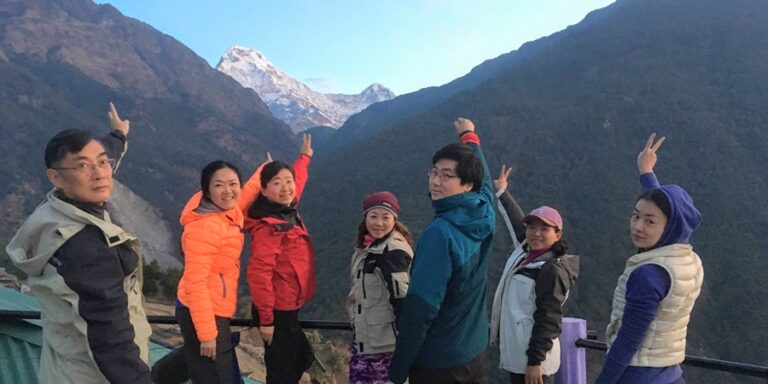
Plan this trip
Ask us about the Ghorepani Poon Hill Trek
We reply from Kathmandu within 24 hours with available dates, your exact price and answers to your questions.
- 16 years guiding in the Himalaya
- Registered in Nepal, Reg. 187391
- Group departures of 12 travelers at most
- Private dates on any day
Call, WhatsApp or Viber